
Material-First Approach
We clean and restore marble, granite, concrete, and travertine. The process is matched to each stone type, not applied from a general cleaning playbook.
Why Specialist Knowledge Matters
The Wrong Cleaner Can Cause Permanent Damage
Marble is sensitive to acid. Vinegar, citrus-based cleaners, and grout cleaners that work on ceramic tile will etch marble and dull its finish permanently. Granite looks similar but responds differently. Travertine has fill material that high-pressure cleaning can dislodge.
Identifying the stone before selecting any method is the step that protects your surface. We do that assessment first, every time.
Acid test
Determines if the surface is acid-sensitive before any cleaner is applied.
pH-matched solutions
Every cleaner is matched to the specific stone composition.
Pressure calibration
Travertine and marble require lower pressure than ceramic tile.
Sealer compatibility check
Identifies the existing sealer type before applying anything new.
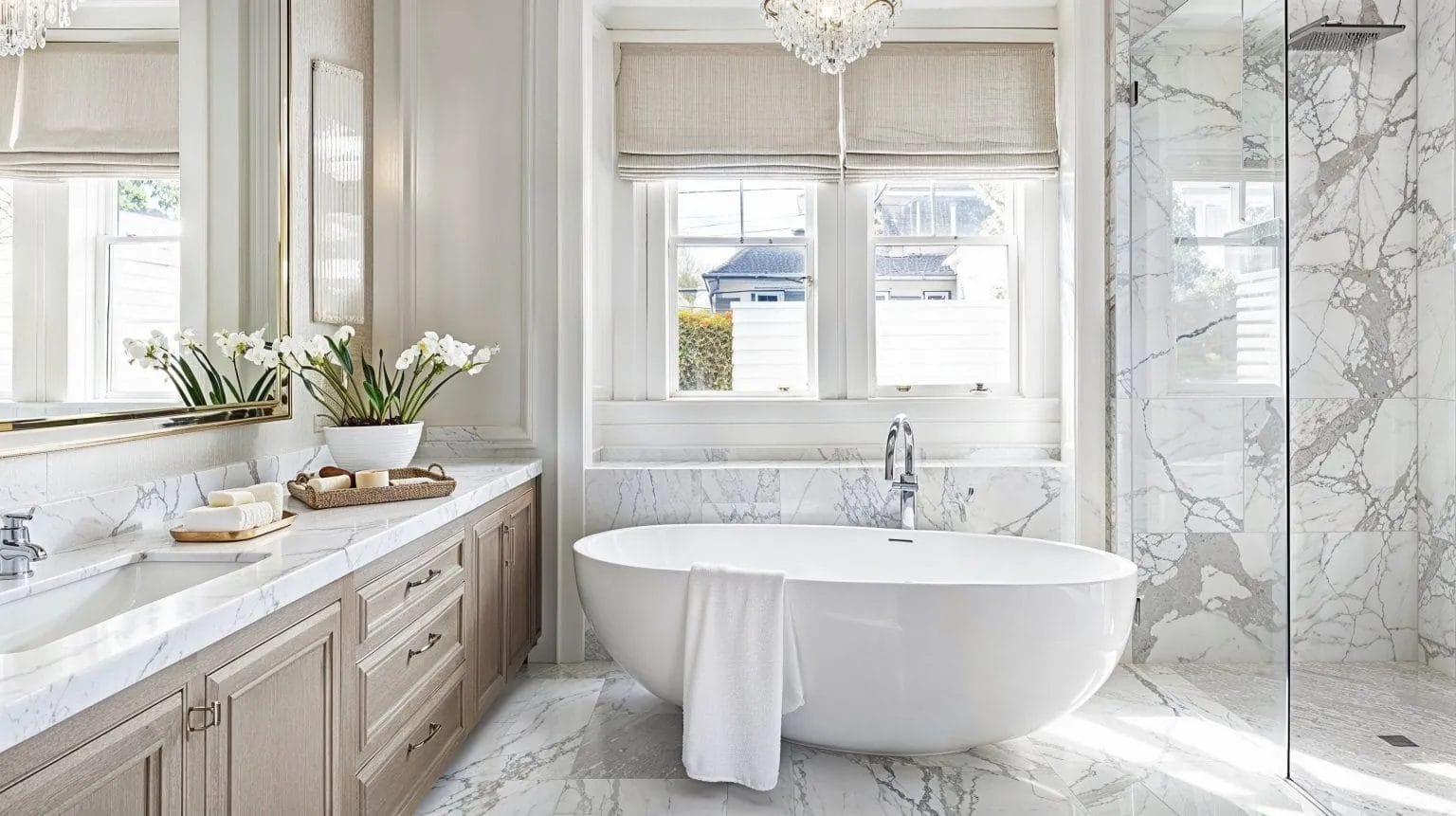
Stone Types We Work With
Marble, Granite, Travertine, and Concrete
Marble
Marble is calcite-based, which means common acidic cleaners — including many household products — etch the surface. Proper cleaning uses pH-neutral solutions and specific buffing techniques to remove buildup without dulling the finish.
Granite
Granite is denser than marble but still absorbs oils and moisture through its surface. Professional cleaning removes embedded grime and restores the natural luster without stripping the factory sealer.
Travertine
Travertine is porous and often filled. Cleaning it requires care around the fill material. The wrong pressure or chemical can pull filler from the pits and leave the surface worse than before.
Concrete
Polished and sealed concrete in kitchens and living spaces collects stains and loses its finish over time. Restoration brings back the sheen and applies a fresh sealer to slow future wear.
Protective Sealing
Sealing Protects the Work
After cleaning and restoration, applying a penetrating stone sealer is the most effective way to extend how long the surface stays clean and protected. Sealer fills the microscopic pores in the stone and slows the absorption of oils, water, and staining agents.
The sealer is matched to the specific stone. We do not use a single product across every surface type.
Related Services
Tile & Grout Cleaning
Professional deep cleaning for ceramic and porcelain tile surfaces.
Learn more →Tile & Grout Restoration
Stain removal, crack repair, grout sealing, and caulk replacement.
Learn more →Commercial Tile Cleaning
Tile and stone maintenance for offices, restaurants, and retail spaces.
Learn more →Your Tile Is Worth Saving. See for Yourself.
Most tile doesn't need replacing. Call us or fill out the form and find out what's possible before you spend a dollar on new tile.